海外孩子為什麼需要「沉浸式中文體驗」?
每週一兩堂課,對海外孩子來說是維持中文的基礎——但光靠這樣,很難讓語言真正「活起來」。研究顯示,語言習得需要足夠密度的輸入與真實的使用情境。沉浸式體驗提供的,正是日常課程給不了的東西:一個讓孩子必須用中文生活的環境,哪怕只有短短幾天。
一週的課和緊密的營隊,差在哪裡?
我常常跟家長說一個比喻。
學中文就像學游泳。
你可以每週去一次游泳課,老師教你划手、教你踢腿、糾正你的姿勢。這很重要,這是基礎。
但真正讓你學會游泳的,是那一次你跳進水裡,發現自己得游過去才能到對岸。
沉浸式體驗,就是那個「跳進水裡」的時刻。
為什麼光靠每週上課不夠?
這不是在否定上課的價值。
每週的中文課是必要的——它提供結構、提供系統、提供持續的輸入。沒有這個基礎,沉浸式體驗也沒有土壤可以生長,甚至可能適得其反。
但語言習得的研究告訴我們一件事:語言需要「密度」,不只是「頻率」。
每週上一堂課,頻率有了,但密度不夠。孩子在課堂上學了一個詞,回到母語環境之後,那個詞沒有機會被用到,就慢慢淡化了。
沉浸式環境的價值在於:它把密度拉高到一個臨界點,讓語言不只是「被學到」,而是「被需要」。
當孩子在營隊裡想表達一件事,身邊沒有人用他熟悉的語言幫他,他必須用中文——這個時刻產生的語言記憶,比課堂上的練習深很多。
沉浸式體驗對不同週期的孩子,有什麼不同的作用?
輸入期|0-3歲
這個階段的孩子太小,還不適合獨立參加營隊。但親子共同參與的沉浸式活動——比如中文親子讀書會、中文主題的家庭活動——可以讓孩子知道,爸爸媽媽以外還有人在說中文,進一步強化語言環境。
媒介期|4-7歲
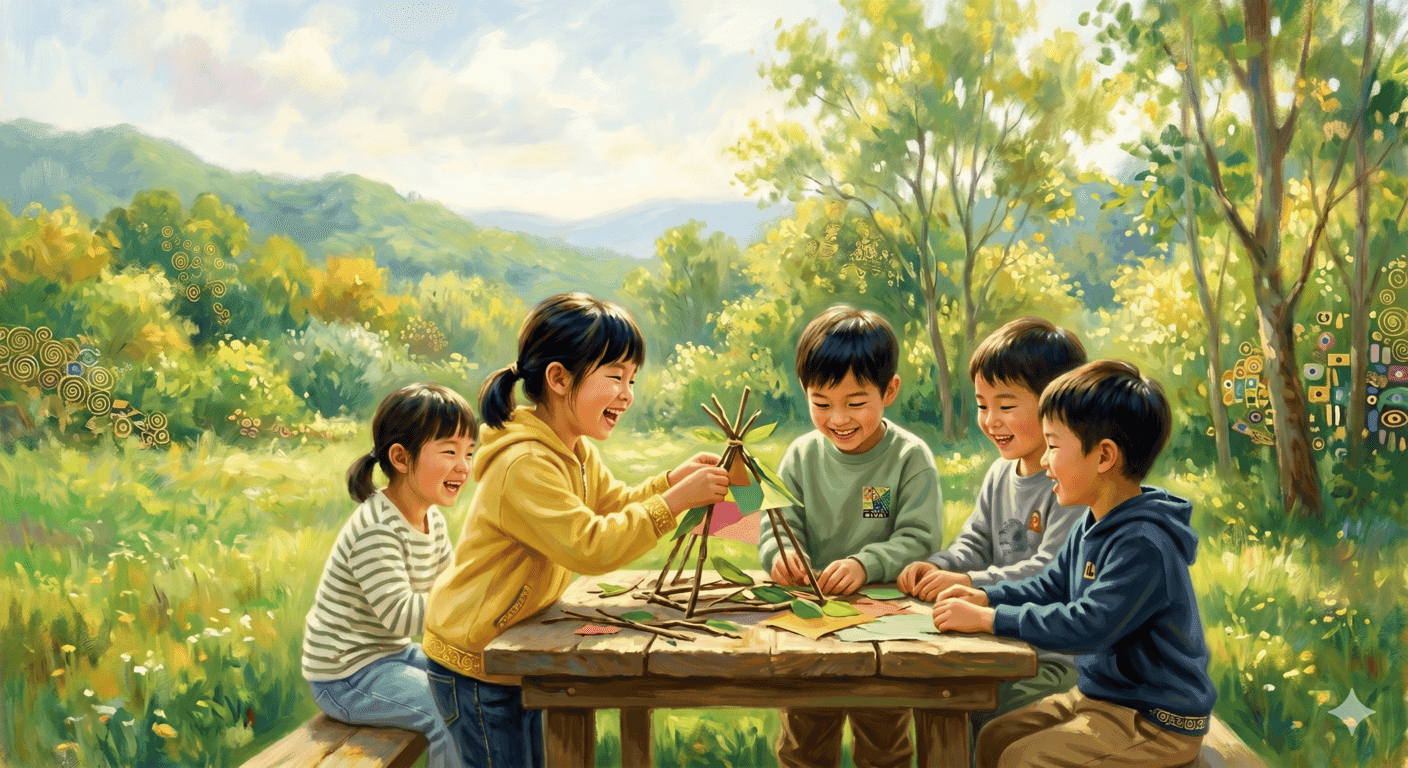
這個年齡的孩子開始有社交需求。跟其他說中文的孩子一起玩,是這個階段最有力的中文動機。他們不是在「學中文」,他們是在「跟朋友玩」,中文只是玩的語言。
社交期|8-11歲
這個年齡是沉浸式體驗效果最強的階段。同儕認同對這個年齡的孩子影響力最大——當他發現說中文的不只是他一個人,說中文是一件「有人陪」的事,語言的心理障礙往往會在幾天內大幅降低。
自驅期|12歲以上
這個年齡的孩子如果還在學中文,沉浸式體驗可以成為一個重要的「確認時刻」——讓他看見自己的中文真的可以用在真實的世界裡。
天天華語的沉浸式體驗是什麼樣子?
過去三年,我們有超過150位來自海外的孩子,參與了我們的「海龜洄游夏令營」。
我們與宜蘭及花蓮的台灣在地小學聯合舉辦五天四夜的過夜營隊,運用每間校園的環境優勢,設計出體驗當地文化的中文沉浸課程——沒有背生字、沒有聽課、沒有考試。
有的是:用中文完成任務、用中文交朋友、用中文解決問題。
語言是工具,不是目標。
當語言變成工具,孩子就不再「學中文」——他開始「用中文」。
這個轉變,往往只需要幾天。
沉浸式體驗之後,然後呢?
沉浸式體驗不是終點,是一個重要的加速器。
營隊結束之後,孩子帶回家的不只是新學的詞彙,而是一個新的自我認知:「原來我可以用中文。」
這個認知,是接下來所有學習的燃料。
如何把這個燃料用好,讓熱度不要在回到自己國家之後迅速冷卻——我們在另一篇文章裡會詳細談。
Grace 是天天華語(Tentenkid)的創辦人,擁有五年線上中文營運經驗、超過三萬堂課的教學紀錄,目前旅居日本,同時也是兩個孩子的媽媽。她的 Podcast《櫃 idea》專門陪伴海外雙語家庭走過語言教育的挑戰與風景。
Why Overseas Kids Need More Than Weekly Chinese Lessons
Weekly lessons keep Chinese in the picture, but immersive experiences give overseas kids the density and real-life context that make the language feel alive.
Why Overseas Kids Need More Than Weekly Chinese Lessons
One or two lessons a week keeps Chinese in the picture — but it rarely makes it feel real. Research on language acquisition is clear: learning sticks when there's enough density of input and real reasons to use it. Immersive experiences give kids something weekly lessons can't — a situation where Chinese is the only option. Even just a few days of that can shift things in ways months of lessons don't.
What's the difference between weekly classes and an intensive camp?
I always come back to the same analogy when I'm talking to parents about this.
Learning Chinese is like learning to swim.
You can go to swim class every week — learn the strokes, work on your kick, get feedback on your form. That matters. That's the foundation.
But what actually teaches you to swim is the moment you jump in and realize you have to make it to the other side on your own.
Immersive experience is that moment. The jump.
So why aren't weekly lessons enough?
This isn't about dismissing lessons. Weekly Chinese class is essential — it provides structure, consistency, and the kind of steady input that builds a foundation over time. Without that base, immersion can actually backfire. You need somewhere for things to land.
But here's what the research on language acquisition keeps showing us: language needs density, not just frequency.
One lesson a week gives you frequency. It doesn't give you density.
A child learns a word in class, goes back to their English-dominant world, and that word never comes up again. The class happened. But nothing reinforced it. So it faded.
Immersive environments change that equation. They push the density high enough that language stops being a subject and starts being a tool.
When a child at camp wants to tell someone something — and there's nobody around to bail them out in their home language — they find a way to say it in Chinese. What they remember from that moment sticks in a way that classroom practice rarely does.
What immersion does at each stage
The Input Stage|Ages 0–3
*(When you are the entire Chinese environment)*
Too young for an independent camp. But parent-child immersive activities — Chinese read-alouds, cultural events where Chinese is the language of the room — do something worth noting: they show kids that Chinese isn't just something their parents do at home. Other people actually use it. That small realization lands differently than you'd expect.
The Bridge Stage|Ages 4–7
*(When play is the whole point)*
Kids this age are starting to care about other kids. Playing alongside other children who speak Chinese is one of the most powerful motivators at this stage — not because anyone's teaching them, but because Chinese becomes the language you use when you want to play. That's a completely different thing from Chinese being homework.
The Social Stage|Ages 8–11
*(When peers matter more than parents)*
This is where immersive experience tends to have the strongest impact. Peer influence is at its peak at this age. When a child discovers that speaking Chinese isn't something only they do — that there's a whole group of kids doing it, that it's just how things work here — the resistance they've built up around Chinese often just... melts away. Sometimes within days.
The Independent Stage|Ages 12 and up
*(When they need to see it work for themselves)*
For older kids who are still in it, immersion becomes a proof of concept. A chance to find out whether their Chinese actually works in the real world. That kind of confirmation does something for a teenager that no amount of parental encouragement can replicate: it makes them believe it themselves.
What TenTenKid's immersive program actually looks like
Over the past three years, more than 150 overseas children have joined our Homecoming Sea Turtle Summer Camp.
We partner with local elementary schools in Yilan and Hualien — two regions where kids actually get to experience what Taiwan feels like outside of a city — to run a five-day, four-night residential camp. Each campus brings its own environment, and we design the experience around it.
No vocabulary drills. No lectures. No exams.
What we do instead: complete challenges in Chinese, make friends in Chinese, solve problems in Chinese.
Language as a tool, not a subject.
When Chinese becomes a tool, something shifts. Kids stop *learning Chinese* and start *using Chinese*.
That shift rarely takes more than a few days.
And after the camp ends?
Immersion isn't the finish line. It's an accelerator.
What children bring home from camp isn't just new vocabulary. It's a new belief about themselves: *I can actually do this in Chinese.*
That belief is what makes the next lesson — and the one after that — actually mean something.
How to keep that going — how to make sure it doesn't quietly disappear the moment they're home — that's what we cover in the next article.
*Grace is the founder of Tentenkid (天天華語), an online Chinese language platform with five years of operation and over 30,000 recorded lessons. She lives in Japan and is a mom of two. Her podcast 《櫃 idea》 accompanies overseas bilingual families through the joys and challenges of raising children between languages and cultures.*