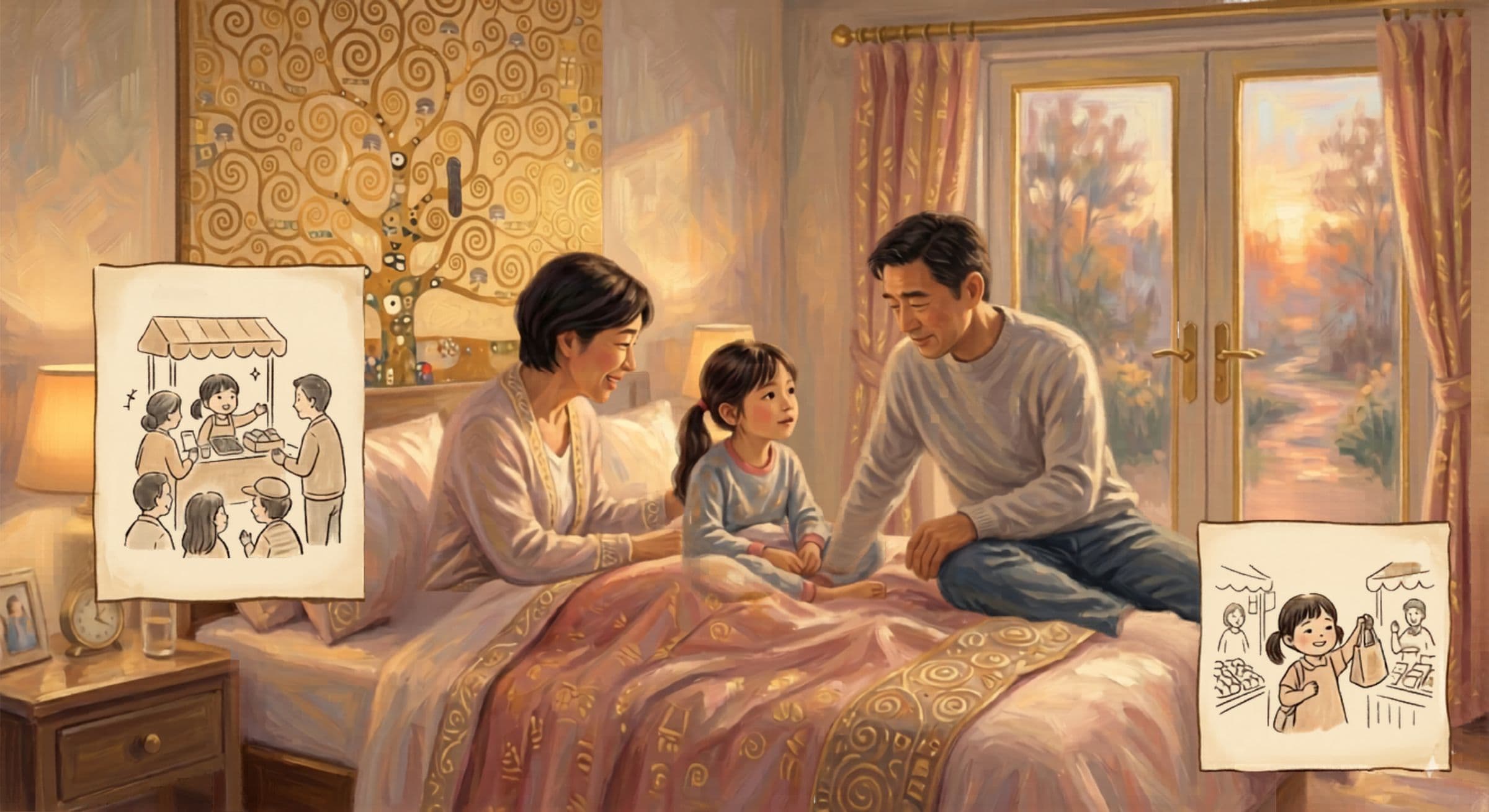
爸媽,先接住他的情緒——這個比學中文更重要
很多海外家長在孩子學中文的過程中,不知不覺從「爸媽」變成了「老師」。根據天天華語五年教學觀察,當家長扮演糾錯者的角色,孩子感受到的不是支持,而是評審。最有效的分工是:讓老師負責教,讓爸媽負責愛。這兩個角色不需要競爭,但必須分開。
那一頓飯,我們誰都沒說話
兒子剛上完中文課,我問他今天學了什麼。他說了一個詞,發音不太準。我下意識地糾正了他。
他沒有反駁,只是把筷子放下,低著頭吃飯。
整頓飯,我們誰都沒說話。
那一刻我才意識到,我一不小心又在飯桌上變成了他的老師,而他選擇了沉默。
爸媽變成老師,是怎麼發生的?
這不是任何人的錯。
海外家長對孩子的中文有焦慮,這個焦慮是真實的。我們擔心孩子跟不上、擔心中文在他們的生命裡消失、擔心有一天他們沒有辦法跟阿公阿嬤說話。
這份焦慮,讓我們開始監督。監督讓我們開始糾正。糾正久了,爸媽的角色就慢慢滑向了老師。
但問題是孩子在學校已經有老師了。在中文課也有老師。
他回到家,他需要的是一個不管他中文說得好不好,都還是接住他中文的爸媽。
角色錯位的三個常見場景
場景一:吃飯時變成中文練習時間
「你剛才那個字念錯了。」 「這個應該說__,不是__。」 「你今天中文課學了什麼?說給我聽。」
飯桌本來是家人放鬆的地方。當它變成中文測驗的場合,孩子學到的不是中文,他學到的是「說中文是有壓力的事」。
場景二:陪寫作業時變成批改老師
字體不工整,爸媽立刻拿筆圈起來。孩子說錯一個發音,爸媽馬上重複正確的給他聽。
這不是不對。但如果每一次開口都有人在等著糾正,換個角度想,你是不是也會選擇不開口。
場景三:用「為你好」包裝的壓力
「我都是為了你好才這麼要求。」 「你看人家的孩子中文說得多好。」 「現在不學,以後會後悔。」
這些話背後都是愛,但孩子感受到的是:「我現在的樣子還不夠好。」
那爸媽的角色是什麼?
不是什麼都不做。
而是做老師做不到的事。
老師可以教他怎麼說,爸媽可以讓他想說。
這是兩件完全不同的事。
爸媽能做的事①:創造「用中文也沒關係」的氛圍
不要求,不糾正,只是用中文跟他說話、給他回應。
哪怕他用雙語回答,你繼續用中文。語言環境的建立不靠要求,靠的是日復一日的存在。
爸媽能做的事②:成為他中文學習的「見證者」
「你今天說了一個我沒聽過的詞,是在哪學的?」 「你剛才那句話說得很流暢耶。」
不是誇獎他「好棒」,而是真實地看見他的進步。這種被看見的感覺,是孩子繼續開口的最大動力。
爸媽能做的事③:讓中文跟美好的事連在一起
一起看一部中文動畫、用中文唱一首他喜歡的歌、跟說中文的阿嬤視訊。
語言跟情感連在一起,才有生命。
老師和爸媽,其實是最好的搭檔
在天天華語,我常常跟家長說一句話:
「把糾正的工作交給我們,把陪伴的工作留給自己。」
不是因為家長做不好,而是因為孩子跟爸媽之間的關係太珍貴了,不應該被「對不對」這件事佔據。
老師在課堂上可以要求他、可以糾正他,因為那是老師的職責,孩子也知道。但爸媽糾正他的時候,他感受到的是:「我讓爸媽失望了。」
這兩種感受,長期下來會走向完全不同的結果。
最後,一個送給自己的提醒
下次孩子說了一句中文,不管對不對。
先回應他說的內容,無論他用什麼語言表示,接住孩子想分享的情緒。
最後你可以說:「謝謝你跟我分享,而且我發現你裡面有用中文説。」
那一句話,可能比任何糾正都更有力量。
*Grace 是天天華語(TenTenKid)的創辦人,擁有五年線上中文營運經驗、超過三萬堂課的教學紀錄,目前旅居日本,同時也是兩個孩子的媽媽。她的 Podcast《櫃 idea》專門陪伴海外雙語家庭走過語言教育的挑戰與風景。*
Meet Them Where They Are. Chinese Can Wait.
Many overseas parents slowly shift from being a parent into being a Chinese teacher. TenTenKid's teaching observations suggest a healthier split: let the teacher teach, and let parents keep the connection.
Meet Them Where They Are. Chinese Can Wait.
The short answer: A lot of overseas parents don't realize they've slowly shifted from being a parent into being a Chinese teacher - and it's quietly changing the relationship. When you're the one correcting every mistake, your child stops feeling supported and starts feeling evaluated. The most effective split is simple: let the teacher teach, and let yourself be the one who shows up for them. Those two roles don't compete - but they need to stay separate.
The dinner where nobody spoke
My son had just finished his Chinese lesson. I asked what he'd learned. He said a word - the pronunciation was a little off. Without thinking, I corrected him.
He didn't argue. He just set down his chopsticks and stared at his bowl.
We didn't say much for the rest of the meal.
That was the moment I caught myself: I'd slipped into teacher mode at the dinner table again. And he'd chosen silence.
How does a parent become a teacher?
Nobody means for this to happen.
The anxiety is real. We worry our kids are falling behind. We worry Chinese will quietly disappear from their lives. We worry that someday they won't be able to talk to their grandparents.
That anxiety turns into monitoring. Monitoring turns into correcting. And somewhere along the way, "parent" quietly slides into "teacher."
But your child already has teachers - at school, in Chinese class.
What they need when they come home is someone who meets them where they are - no matter what language comes out.
Three ways the role confusion shows up
1. Dinner becomes a Chinese drill
*"You said that wrong."* *"It's not __, it's __."* *"What did you learn in class today? Tell me."*
The dinner table is supposed to be where everyone exhales. When it turns into a pop quiz, kids don't learn Chinese - they learn that speaking Chinese feels stressful.
2. Homework help turns into a marking session
Messy handwriting gets circled. A mispronounced tone gets corrected on the spot.
This isn't wrong, exactly. But think about it from their side: if every attempt comes with someone waiting to correct you, wouldn't you eventually just stop attempting?
3. "I'm doing this for you" pressure
*"I only push you because I love you."* *"Look how well other kids speak Chinese."* *"You'll thank me someday."*
Every one of those sentences comes from love. But what a child hears is: *the way I am right now isn't good enough.*
So what is a parent's actual job?
Not nothing.
Something different from what a teacher does.
A teacher can show them how to speak. A parent can make them want to.
Those are not the same thing.
What parents can do ①: Make Chinese feel safe
Don't require it. Don't correct it. Just use it - talk to them in Chinese, respond in Chinese, keep going even when they answer in a mix of languages.
You don't build a language environment by pushing. You build it the way you'd keep a fire going - just keep showing up, keep adding small things, and don't let it go out.
What parents can do ②: Be a witness to their progress
*"Where did you pick up that word? I hadn't heard you say it before."* *"That sentence came out really naturally just now."*
Not empty praise - real noticing. The feeling of being genuinely seen is one of the most powerful reasons a child keeps trying.
What parents can do ③: Connect Chinese to things they love
A show they're already into. A song they chose themselves. A video call with a grandparent who speaks Chinese.
Language is like a plant. Water it with joy, it grows toward the light. Water it with pressure, it survives - but it never really blooms.
Teachers and parents are actually the best team
At TenTenKid, there's one thing I find myself saying to parents again and again:
"Leave the correcting to us. Keep the connection for yourself."
Not because parents can't correct - but because your relationship with your child is the whole foundation. Don't let "correct" and "incorrect" be the thing they remember most about learning Chinese with you.
When a teacher corrects a child, the child understands: that's the teacher's job. But when a parent corrects them, what the child feels is: *I let them down.*
Over time, those two experiences lead to completely different places.
One thing to try starting tonight
Next time your child says something in Chinese - right or wrong, mixed with English or not -
respond to what they said. Let the how go, at least for now.
Then, if it feels right, you can say:
*"Thank you for sharing that with me. And I noticed - there was some Chinese in there."*
That lands differently than any correction. It says: *I see you trying. That's enough.*
*Grace is the founder of TenTenKid (天天華語), an online Chinese language platform with five years of operation and over 30,000 recorded lessons. She lives in Japan and is a mom of two. Her podcast 《櫃 idea》 accompanies overseas bilingual families through the joys and challenges of raising children between languages and cultures.*